

What kind of inflatable tent would you like?
Privacy statement: Your privacy is very important to Us. Our company promises not to disclose your personal information to any external company with out your explicit permission.


A disaster relief tent is a specialized, rapid-deployment shelter designed to provide immediate protection and habitation during emergency scenarios. Unlike standard camping equipment, these structures are engineered to withstand harsh environmental conditions, including high winds, heavy snow loads, and extreme temperatures, ensuring the safety of victims and operational efficiency for first responders.
These units serve as critical infrastructure for field hospitals, command centers, storage facilities, and mass accommodation. Their modular design allows for quick setup by small teams without heavy machinery, significantly reducing the time between arrival at a disaster site and the establishment of a functional base. For procurement officers, selecting the right inflatable or metallic frame structure is essential for minimizing logistical delays and maximizing the utility of aid resources.
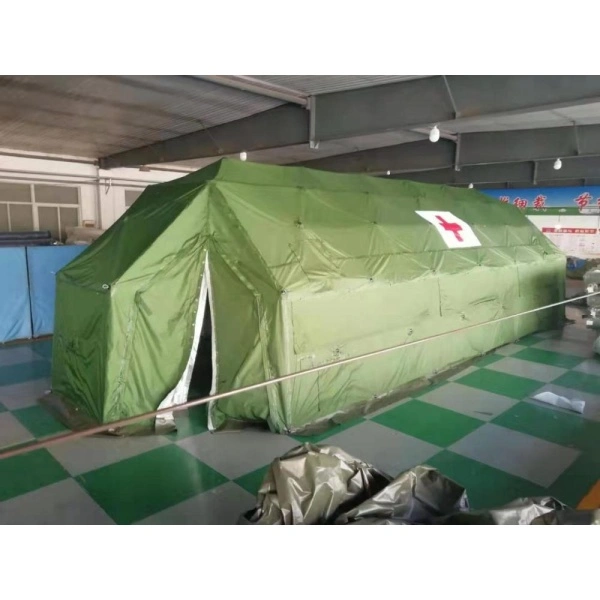
Reliable emergency response depends on rigorous manufacturing standards. Our production process integrates advanced material testing with strict quality control protocols to ensure every unit meets international safety requirements. We utilize high-strength PVC tarpaulin and durable inflatable beams that offer superior resistance to tearing, UV radiation, and moisture ingress.
Each tent undergoes pressure holding tests and seam strength evaluations before dispatch. This commitment to quality ensures that your deployed assets remain functional throughout the entire duration of the relief operation, reducing the risk of failure in critical moments. As a professional manufacturer, we supply products for major institutions such as the United Nations and the Red Cross Society, verifying our capability to meet large-scale procurement demands.
Selecting the appropriate shelter requires matching technical specifications to the specific needs of the mission. The primary decision factor is the intended application: medical tents require sterile, insulated environments, while rescue operation tents prioritize rapid deployment and spacious internal volume for equipment storage.
Consider the following key criteria when evaluating suppliers:
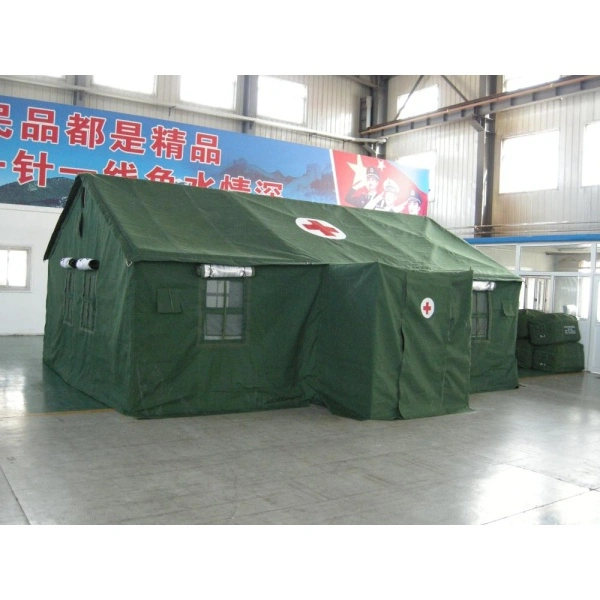
Use this checklist to evaluate potential suppliers and ensure all operational requirements are met before finalizing your procurement order.
Avoid costly mistakes by addressing these frequent challenges encountered during the sourcing and deployment of emergency shelters.
Inflatable tents can suffer from leaks due to punctures or valve failures in rugged terrain.
Solution:Select models with dual-chamber beam systems. If one chamber leaks, the other maintains structural integrity. Always request a repair kit with every order.
Poor ventilation leads to moisture accumulation, causing mold and discomfort for occupants.
Solution:Choose tents with adjustable air inlet and outlet vents. For medical use, consider units with integrated HEPA filtration and positive pressure capabilities.
Tents requiring specialized tools or extensive training delay deployment efforts.
Solution:Prioritize self-inflating designs that can be set up by a small team in under 15 minutes. Verify that supplier provides clear, pictorial assembly guides.
Improper anchoring or weak guylines can lead to tent collapse in high-wind conditions.
Solution:Ensure the tent includes robust ground anchors suitable for the soil type (snow, sand, or hard ground). Use all provided guylines and tensioning points.
When sourcing disaster relief tents, partner with manufacturers who combine technical expertise with a proven history of supporting global humanitarian efforts.
Look for suppliers who already service organizations like the United Nations and the Red Cross Society. This experience indicates an understanding of the rigorous standards required for effective disaster response.
Verified Track RecordChoose enterprises that incorporate design, production, and sales under one roof. This integration allows for faster customization, better quality control, and more responsive communication during urgent orders.
Full-Service ProviderA supplier offering a wide range of solutions—from medical tents to decontamination units—can streamline your procurement process, ensuring compatibility and consistency across your entire relief operation inventory.
Versatile SolutionsInflatable disaster relief tents are designed for rapid deployment. Depending on the size and number of personnel, most units can be fully inflated and ready for occupancy within 10 to 15 minutes. This speed is a significant advantage over traditional pole tents, which can take hours to assemble.
Yes, professional-grade inflatable tents are engineered to withstand harsh environments. They are typically tested for high wind loads (often up to Beaufort Scale 8-9) and can operate in temperatures ranging from -30°C to +70°C. Specialized insulation and flooring options are available for arctic or desert deployments.
Absolutely. Inflatable medical tents are widely used in emergency medicine. They offer a clean, controlled environment with options for positive pressure ventilation to keep out dust and contaminants. Internal lighting, power distribution, and heating/cooling systems can be easily integrated into the structure.
Maintenance is minimal but essential. After each use, the tent should be deflated, cleaned, dried thoroughly, and packed away to prevent mold. Regularly check air valves and seams for wear. Most suppliers provide a repair kit containing patches and adhesive for on-site fixes.
Consider the number of occupants, equipment storage needs, and required internal zones (e.g., triage, surgery, recovery). Standard sizes range from small 20sqm units to large modular complexes exceeding 1000sqm. It is advisable to plan for future expansion by selecting modular designs that can be linked together.

Privacy statement: Your privacy is very important to Us. Our company promises not to disclose your personal information to any external company with out your explicit permission.
Fill in more information so that we can get in touch with you faster
Privacy statement: Your privacy is very important to Us. Our company promises not to disclose your personal information to any external company with out your explicit permission.