

What kind of inflatable tent would you like?
Privacy statement: Your privacy is very important to Us. Our company promises not to disclose your personal information to any external company with out your explicit permission.


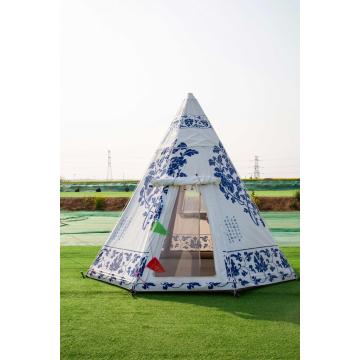

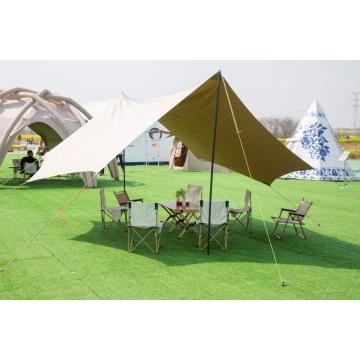


An inflatable decontamination tent is a specialized emergency response structure designed to safely process individuals exposed to hazardous materials. These rapid-deployment units create a controlled environment where contaminated personnel can be washed down, assessed, and cleared before re-entering safe zones.
Unlike traditional rigid structures, our inflatable medical decontamination shelters offer immediate setup capabilities critical in disaster scenarios. Whether responding to chemical spills, biological threats, or industrial accidents, these tents provide the essential infrastructure for mass decontamination operations.
Yangzhou Canway Outdoor Equipment Co., Ltd manufactures these systems using high-tech materials that ensure durability against harsh environmental conditions while maintaining lightweight portability for rapid transport by air, land, or sea.
Deployment under 15 minutes
Hazardous material containment
Capacity for multiple patients
Our manufacturing process adheres to rigorous international standards to ensure every inflatable decontamination tent meets the demands of emergency response. As a high-tech enterprise, Yangzhou Canway integrates advanced design principles with proven production techniques.
We utilize high-strength PVC-coated polyester fabrics that resist tears, abrasions, and UV degradation. This ensures your inflatable military decontamination units remain operational in extreme weather conditions, from freezing temperatures to intense heat.
Each tent features reinforced seam welding and strategic load-bearing points. Our engineering team designs these structures to withstand wind loads and maintain internal pressure stability, crucial for containing hazardous vapors during decontamination procedures.
As a supplier trusted by the Red Cross Society and United Nations agencies, our facilities follow strict quality control protocols. Every batch undergoes testing for air retention, fabric tensile strength, and zipper/seal integrity before shipment.
From single-unit configurations for localized incidents to large-scale mass decontamination corridors, our modular design allows procurement teams to order exactly the capacity needed for their specific operational requirements.
Selecting the appropriate decontamination solution requires evaluating several technical and operational factors. Buyers should consider the following criteria when sourcing inflatable medical tents for emergency preparedness programs.
Determine whether the tent will be used in maritime, terrestrial, or aerial deployment scenarios. Our inflatable disaster relief tents are engineered for versatility, but specific environmental modifiers may be required for coastal or arctic operations.
Assess the expected volume of casualties. Mass decontamination tents require larger footprints and multiple washing stations, while single decontamination units suffice for isolated exposure incidents. Match the tent dimensions to your projected patient flow.
Verify power requirements for blowers, lighting, and water heating systems. Our tents feature standardized utility ports and grounding options to facilitate seamless connection to generator sets and water purification units.
Consider the storage footprint when deflated. Compact packing sizes allow for efficient transport in standard shipping containers or aircraft cargo holds, reducing logistics costs and enabling faster global deployment.
Use this comprehensive checklist to evaluate potential suppliers and ensure your inflatable decontamination tent procurement meets all safety and operational standards.
When sourcing inflatable decontamination tents, buyers benefit from partnering with a manufacturer that combines technological innovation with extensive field experience. Here is why organizations worldwide trust our solutions.
Our products have been deployed by the United Nations, Red Cross Society, and various national defense agencies. This institutional validation demonstrates our ability to meet the highest standards of reliability and performance.
From single decontamination units for small teams to mass decontamination corridors for large-scale incidents, we offer scalable solutions. This one-source capability simplifies procurement workflows and reduces vendor management complexity.
Our R&D team provides tailored engineering solutions for unique operational requirements. Whether you need specialized branding, modified dimensions, or integrated utility systems, our OEM/ODM services adapt to your exact specifications.
Understanding common pitfalls in inflatable medical tent procurement helps buyers make informed decisions and avoid costly mistakes. Below are frequent issues and how experienced manufacturers address them.
Poor quality zippers, inadequate blower redundancy, or insufficient seam welding often cause deployment failures. Yangzhou Canway addresses this by using heavy-duty industrial zippers, dual-blower systems, and automated seam welding processes that ensure consistent structural integrity across every unit.
Many suppliers make generic claims about chemical resistance without providing test data. Request specific compatibility charts showing which chemicals the PVC coating resists. Our factory provides detailed material safety data sheets and can conduct custom chemical resistance testing for specialized applications.
Untested designs may lack the structural reinforcements needed for real-world conditions. Always request reference projects and client testimonials from established institutions. Our long-standing relationships with the UN and Red Cross serve as verification of our design maturity and field performance.
Beyond unit price, consider shipping volume, import duties, accessory costs (blowers, pumps, repair kits), and training expenses. Our compact packing design minimizes freight volume, and we provide complete accessory packages to ensure transparent total cost calculations.
Get answers to common questions about inflatable decontamination tent specifications, deployment, and maintenance from our technical experts.
Our inflatable decontamination shelters can be fully inflated and ready for operation within 10-15 minutes by a trained crew of 3-4 personnel. The self-inflating blower system eliminates the need for external power sources during initial setup, making it ideal for remote or emergency locations.
Yes. Our inflatable military decontamination units are engineered to operate in temperatures ranging from -20°C to 50°C. They withstand wind speeds up to 70 km/h and are rated for moderate precipitation. For extreme environments, we offer insulated liners and heated air systems as optional accessories.
With proper maintenance and storage, our inflatable tents have a functional lifespan of 5-7 years of regular use. The high-grade PVC material resists UV degradation and chemical exposure. We provide comprehensive maintenance guidelines and recommend annual inspections to maximize service life.
Yes. We include detailed operation manuals, video tutorials, and on-site training sessions for bulk orders. Our training covers inflation procedures, safety protocols, decontamination workflow integration, and basic troubleshooting to ensure your teams can deploy the system confidently.
We offer extensive OEM/ODM customization including custom colors, logos, branding, modified dimensions, specialized utility ports, and integrated ventilation systems. Our design team works closely with procurement specialists to tailor each unit to your specific operational requirements.

Privacy statement: Your privacy is very important to Us. Our company promises not to disclose your personal information to any external company with out your explicit permission.
Fill in more information so that we can get in touch with you faster
Privacy statement: Your privacy is very important to Us. Our company promises not to disclose your personal information to any external company with out your explicit permission.