

What kind of inflatable tent would you like?
Privacy statement: Your privacy is very important to Us. Our company promises not to disclose your personal information to any external company with out your explicit permission.


Disaster relief shelters are temporary, rapidly deployable housing solutions designed to provide immediate protection and dignity to displaced populations during humanitarian crises. These structures serve as the critical first link in emergency response chains, offering weather-resistant environments for victims of natural disasters, conflicts, and unexpected evacuations.
Unlike standard camping equipment, professional disaster relief tents undergo rigorous testing for structural integrity, fire resistance, and UV stability. They are engineered to withstand harsh environmental conditions while maintaining a lightweight profile that facilitates rapid transport by air, land, or sea.
Our inflatable medical tents and rescue tents represent the industry standard for emergency accommodation. By combining advanced material science with practical design, we ensure that relief organizations can deploy functional living spaces within hours rather than days.
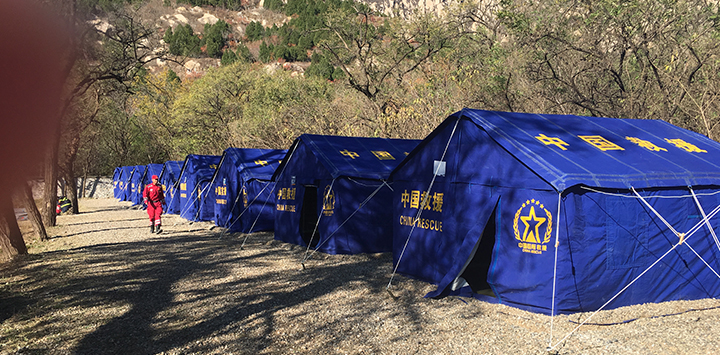
Yangzhou Canway Outdoor Equipment operates as a high-tech enterprise integrating design, production, and sales. Our manufacturing processes utilize automated cutting and sealing technologies to ensure consistent quality across every unit produced.
Buyer Benefit: Automated production reduces human error, ensuring that every tent meets exact specifications for volume, pressure, and durability before it leaves our facility.
We source premium PVC-coated polyester fabrics that offer exceptional tensile strength and tear resistance. Each batch undergoes laboratory testing for flame retardancy, waterproofing, and UV resistance to meet international safety standards.
Buyer Benefit: Certified materials reduce liability risks and ensure compliance with procurement regulations for government and NGO tenders.
Our products are trusted by major institutions including the United Nations and the Red Cross Society. We maintain strict documentation and traceability protocols throughout the supply chain.
Buyer Benefit: Sourcing from a verified supplier simplifies your procurement workflow and accelerates approval processes for large-scale orders.
With dedicated production lines for both inflatable and metallic frame tents, we can scale output to meet urgent bulk requirements without compromising lead times.
Buyer Benefit: Reliable capacity ensures on-time delivery even during peak crisis periods when demand spikes unexpectedly.
In the first 48 hours of a disaster, time is critical. Inflatable shelters can be erected in minutes using integrated blowers, whereas traditional pole tents require manual assembly and specialized labor.
Key Consideration: Evaluate your operational timeline. If rapid deployment is non-negotiable, inflatable technology offers the fastest time-to-shelter for affected populations.
Different climates demand different material specifications. High-wind zones require reinforced anchoring systems, while tropical regions need enhanced ventilation and mold-resistant coatings.
Key Consideration: Match the shelter's technical specs to the specific environmental hazards of your target deployment zone.
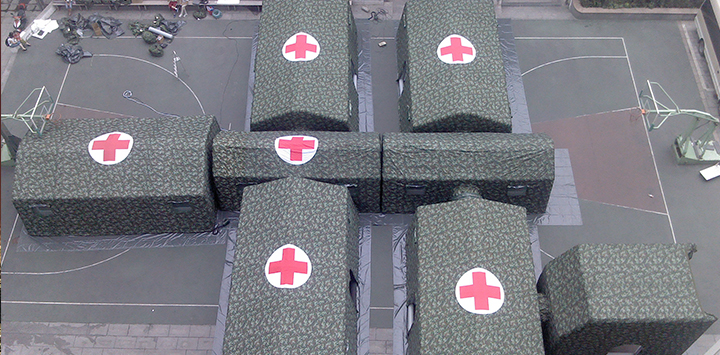
Modern relief efforts often start small but grow quickly. Modular designs allow you to connect multiple units to create larger communal spaces, medical bays, or storage areas.
Key Consideration: Choose a system that allows expansion without requiring completely different inventory, streamlining your logistics.
When space is at a premium in cargo planes or shipping containers, packed volume matters. Inflatable shelters pack down significantly smaller than rigid-frame alternatives.
Key Consideration: Lower packed volume reduces freight costs per unit and maximizes the number of shelters delivered per shipment.
Use this checklist to evaluate potential suppliers and ensure your emergency shelter investment meets operational needs.
Buyers often receive mixed batches where some units have minor seam imperfections or fabric inconsistencies, leading to deployment failures in the field.
Solution: Partner with manufacturers who use automated production lines and implement 100% inspection protocols. Yangzhou Canway utilizes high-tech equipment to minimize variance between units.
Suppliers quote low unit prices but charge exorbitant rates for bulky packaging, eroding your budget and increasing your landed cost.
Solution: Prioritize inflatable shelter designs that pack compactly. Request detailed volumetric weight calculations before ordering to accurately estimate total shipping expenses.
When a blower fails or a valve leaks during an active operation, delayed communication from the supplier can stall the entire relief effort.
Solution: Establish clear communication channels and response time SLAs with your supplier before signing contracts. Choose partners with established international support networks.
Some suppliers provide outdated or forged certificates that don't meet the specific requirements of UN or government tenders.
Solution: Verify all certifications directly with issuing bodies. Work only with established manufacturers like Yangzhou Canway who supply major institutions and maintain transparent documentation.
Our inflatable disaster relief shelters serve diverse sectors requiring rapid, reliable temporary infrastructure. From maritime emergencies to military operations, these units adapt to complex environments.
Inflatable medical tents provide sterile, climate-controlled environments for triage, surgery, and patient isolation in disaster zones. Their quick setup capability is vital for mobile field hospitals.
Defense forces rely on durable inflatable shelters for forward operating bases, command centers, and troop accommodation. The lightweight nature supports airborne drops and rapid mobilization.
NGOs and aid agencies use mass decontamination tents and refugee shelters to protect vulnerable populations from extreme weather. Scalable designs allow for community-sized settlements.
Coastal rescue teams deploy inflatable shelters for emergency response coordination and survivor processing after maritime accidents or natural disasters affecting coastal communities.
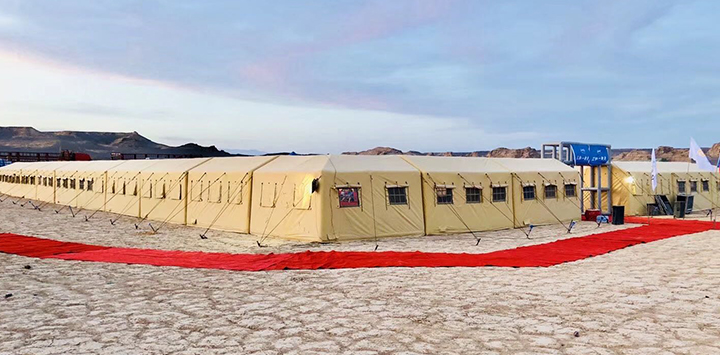
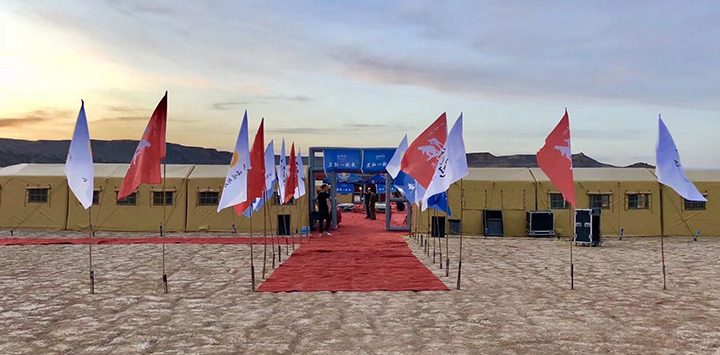
Selecting the right partner for disaster relief shelter procurement requires more than price comparison. Evaluate suppliers against these critical benchmarks to mitigate risk and ensure long-term reliability.
Prioritize manufacturers with documented experience supplying major institutions like the United Nations, Red Cross, and national defense agencies. This history validates their ability to meet stringent procurement standards.
Choose suppliers who handle both design and production internally. This integration allows for faster iteration, better quality control, and the ability to customize shelters for specific operational requirements.
International procurement involves complex logistics, customs documentation, and compliance requirements. Suppliers with established import/export trade departments streamline these processes significantly.
A supplier offering both inflatable and metallic frame tents provides flexibility. You can mix and match solutions based on budget, duration of stay, and environmental conditions without managing multiple vendors.
Answers to common procurement questions regarding inflatable disaster relief shelters, deployment logistics, and maintenance.
High-quality inflatable shelters designed for emergency use typically last between 3 to 5 years with proper maintenance. Factors affecting lifespan include frequency of deployment, exposure to UV radiation, and adherence to inflation/deflation procedures. For long-term relocation projects, our metallic frame alternatives offer extended durability.
An inflatable medical tent can be fully erected and pressurized in approximately 15 to 20 minutes by a team of two personnel. This rapid deployment capability is one of the primary advantages over traditional pole tents, which can take several hours to assemble.
Yes. As a professional manufacturer, we offer OEM services including custom logo printing, color matching, and branding modifications. This allows relief organizations to maintain visual consistency across their fleet of shelters and enhance brand visibility during public operations.
We accommodate various order sizes depending on product type. For standard inflatable tents, we work with buyers ranging from single-unit trials to large-scale institutional contracts. Contact us for specific MOQ details based on your configuration requirements.
Yes, we recommend and typically include basic repair kits with every order. These kits contain patch materials, valve tools, and binding cords to address minor field repairs. For larger deployments, we can prepare comprehensive spare parts packages including replacement blower motors and anchor sets.
Our products undergo rigorous testing for flame retardancy, tensile strength, and waterproofing. We supply products to institutions requiring compliance with international standards. Specific certification documentation is available upon request for tender submissions.

Privacy statement: Your privacy is very important to Us. Our company promises not to disclose your personal information to any external company with out your explicit permission.
Fill in more information so that we can get in touch with you faster
Privacy statement: Your privacy is very important to Us. Our company promises not to disclose your personal information to any external company with out your explicit permission.