

What kind of inflatable tent would you like?
Privacy statement: Your privacy is very important to Us. Our company promises not to disclose your personal information to any external company with out your explicit permission.


An army medical tent is a specialized, portable shelter designed to provide immediate medical care in remote or disaster-stricken areas. Unlike standard camping tents, these structures are engineered for rapid deployment and durability under harsh conditions.
These units serve as temporary field hospitals, offering protection against wind, rain, dust, and extreme temperatures. They are critical for military operations, humanitarian aid missions, and emergency response teams that need to establish a functional clinic within minutes of arrival.
Key Benefit: Rapid setup ensures your medical team can begin patient triage immediately, without waiting for permanent infrastructure.
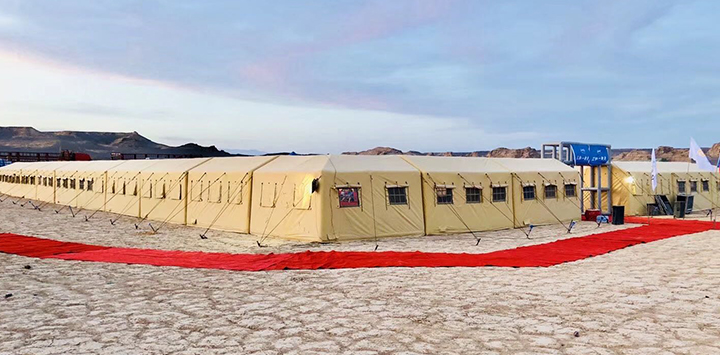
We use PVC-coated polyester or nylon fabrics with high tensile strength. This ensures the tent withstands heavy winds, snow loads, and rough terrain without tearing.
Every inflatable medical tent undergoes strict testing for air retention, seam integrity, and UV resistance before shipment. We supply products for institutions like the United Nations and the Red Cross Society.
Our factory offers OEM/ODM services to tailor interior layouts, insulation levels, and ventilation systems to specific mission requirements.
Inflatable architecture allows for setup times under 10 minutes by a small crew, significantly faster than traditional pole-and-pipe structures.
Selecting the correct field hospital tent requires evaluating several technical factors. The wrong choice can lead to operational delays, compromised patient safety, or equipment failure.
Determine the number of patients you need to treat simultaneously. A standard medical tent might accommodate 2-4 beds, while larger units can handle 10+ patients plus staff areas.
Ensure the tent material has appropriate thermal insulation for your operating environment. Cold-weather tents require reinforced insulation, while hot-climate units need enhanced ventilation.
Consider transport logistics. Inflatable tents pack down smaller and lighter than rigid frame alternatives, making them ideal for air drops or vehicle transport to remote locations.
Verify manufacturer's experience with international aid organizations (UN, Red Cross).
Request sample fabric swatches to test durability and waterproofing locally.
Confirm lead times match your deployment schedule, especially during peak seasons.
Check wind resistance rating (typically up to 70-80 km/h for military grade).
Ensure fire-retardant certifications meet local safety regulations.
Verify availability of spare parts (blowers, repair kits) for long-term maintenance.
Choose a supplier that handles design, production, and sales in-house. This reduces communication gaps and ensures accountability from order to delivery.
Look for manufacturers who have supplied major institutions like the United Nations or Red Cross. Their existing contracts validate reliability and quality.
A good supplier provides detailed setup guides, video tutorials, and on-call technical support to assist your team during deployment.
Problem: Traditional tents take hours to assemble with multiple poles and guylines.
Solution: Switch to inflatable architecture. Our medical tents inflate automatically via integrated blowers, reducing setup time to under 10 minutes.
Problem: Cheap fabrics tear in high winds or leak during heavy rain.
Solution: Specify PVC-coated polyester with high tensile strength. Verify wind load ratings (up to 80km/h) and waterproof pressure ratings (≥3000mm H2O).
Problem: Single-layer tents offer no temperature control, risking hypothermia or heatstroke.
Solution: Opt for double-wall construction with inner PEVA liners or add insulated underlays. This creates a thermal buffer zone.
Problem: Stagnant air increases infection risk and discomfort for patients.
Solution: Ensure the tent design includes adjustable ventilation windows and mesh panels for cross-breeze without compromising weather protection.
Military medical tents are versatile assets used across various sectors where rapid, reliable shelter is critical.
After earthquakes, floods, or hurricanes, these tents provide immediate surgical and triage capabilities in devastated areas.
Deployed in forward operating bases, they offer protected medical care in hostile environments.
Companies use them as on-site clinics for workers in isolated locations far from hospitals.
Used on large vessels or offshore platforms as infirmaries for crew health management.
Most inflatable medical tents can be fully inflated and ready for use in under 10 minutes by a team of two people. This is significantly faster than traditional pole-based structures, which can take 30-60 minutes.
Yes. We offer tents with double-wall construction and optional insulated liners that can withstand temperatures down to -20°C. These are specifically designed for arctic or high-altitude operations.
With proper maintenance, our PVC-coated polyester tents can last 5-7 years of continuous use. Regular cleaning and storage in a dry environment extend their service life significantly.
Yes, every tent comes with a basic repair kit including patch material, glue, and replacement valves. For major components, we can ship spare blowers or pumps upon request.
Absolutely. We offer OEM/ODM services to customize interior dividers, window placements, electrical conduit ports, and branding according to your specific medical protocols.

Privacy statement: Your privacy is very important to Us. Our company promises not to disclose your personal information to any external company with out your explicit permission.
Fill in more information so that we can get in touch with you faster
Privacy statement: Your privacy is very important to Us. Our company promises not to disclose your personal information to any external company with out your explicit permission.